Mobility · Reference · Intermediate
Bicycles as Transportation When Fuel Is Gone
Inspect before you load, carry a kit that matches this bicycle, and know which repairs are field repairs and which are structural.
This is for educational purposes only. Not professional medical, electrical, or safety advice.
Warning
Walk the bicycle if braking, steering, wheel retention or structural integrity is doubtful. Tape, epoxy, improvised welding and extra spoke tension do not establish that a damaged bicycle is safe to ride.
- 01
Inspect before you load anything
Check tires, wheel retention, steering, drivetrain, brake operation and frame or fork damage. Do not ride a cracked, bent, delaminated or otherwise compromised frame or fork, or a bicycle whose brakes cannot stop and hold it. A field patch is not a structural repair, and exact inspection criteria and fastener torques must come from that bicycle's manual — universal values are unconfirmed.
- 02
Carry a kit that matches this bicycle
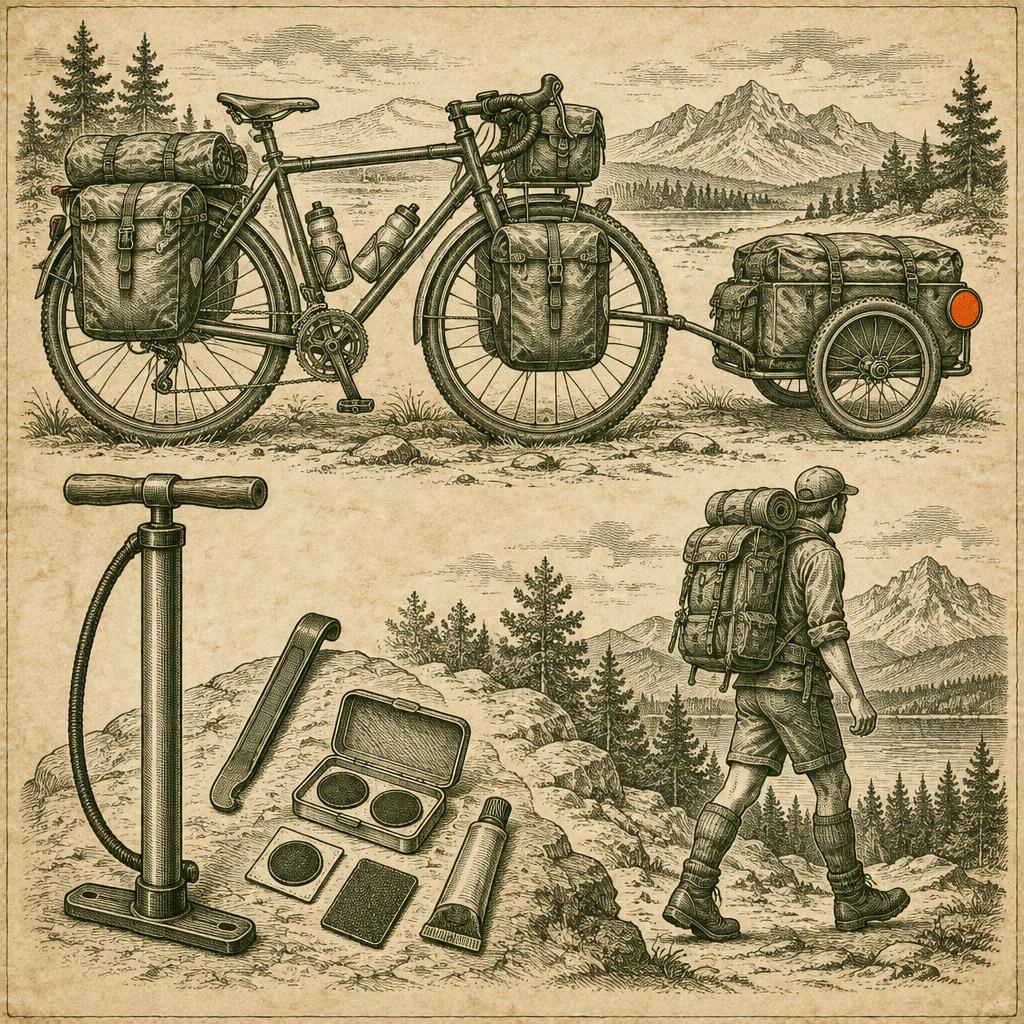
Pump, tubes in the right size, levers, patches and their adhesive, a boot, multitool, axle tools, chain tool, compatible connecting links, spoke wrench, spare pads and cables where applicable, lubricant, and selected rack and axle fasteners. Keep the printed compatibility list with it. This is an editorial preparedness inventory, not a claim that every bicycle uses every item.
- 03
Keep tube patching separate from tubeless plugging
For a tube: remove the wheel, find the puncture, inspect the tire and rim for what caused it, then patch according to the kit's preparation and adhesive-drying instructions or fit a sound tube. For tubeless systems, use only the plug manufacturer's procedure and compatible sealant — do not assume a tread plug repairs a damaged bead or a major sidewall cut. A verified product-specific plug procedure was not obtained in the sources reviewed, so that step stays unconfirmed here.
- 04
Repair a broken chain with its own joining system
Many chains use a master or quick link rather than a driven connecting rivet. Park Tool's MLP-1.2 opens links by squeezing and closes them by spreading the handles, and supports compatible 5–13-speed master-link chains but not older clip-style links with both pins on one plate. That compatibility does not mean links interchange between chains. Remove damaged sections only using the chain maker's procedure, and after shortening a chain do not assume every gear combination is still usable.
- 05
Adjust brakes by brake type, not by a generic recipe
Cable-operated rim brakes, cable discs and hydraulic discs need different procedures. Inspect pad wear, pad retention, cable damage, contamination and hose leaks, and keep lubricant off braking surfaces. Reconnect any brake you released for wheel removal, then do a walking-speed brake test before riding. Universal pad clearance, cable-clamp torque, rotor limits and hydraulic bleeding instructions are unconfirmed — print the actual component instructions next to this page.
- 06
Limit screws set travel; the barrel adjuster sets indexing
Park Tool identifies derailleur limit screws as protection against the chain entering the spokes or the frame. Check the hanger first: if it is visibly bent, ordinary adjustment will not solve the problem. Do not 'fix' poor indexing by randomly turning both limit screws.
- 07
Limit field wheel truing to small corrections on a sound wheel
Spokes pull the rim toward their respective hub sides, so use a correctly sized spoke wrench and a fixed reference and correct lateral wobble gradually while preserving centering and reasonable tension. Park distinguishes four separate checks: lateral truth, radial truth, dish or centering, and spoke tension — a wheel that looks straight is not necessarily correctly tensioned. A universal quarter-turn rule or spoke-tension number is unconfirmed, and substantial damage needs repair or replacement rather than ever-tighter spokes.