Insects & Pests · Reference · Basic
Repellent That Actually Works: DEET, Picaridin and Friends
Which repellent ingredients CDC and EPA stand behind, what the percentage on the bottle really means, and how to apply it without hurting your family.
This is for educational purposes only. Not professional medical, electrical, or safety advice.
Warning
Never substitute household insecticide or fabric-treatment permethrin for a skin repellent. Follow the label on the specific product you bought.
- 01
Pick a registered ingredient
CDC names DEET; picaridin (also called icaridin or KBR 3023); IR3535; oil of lemon eucalyptus (OLE); para-menthane-diol (PMD); and 2-undecanone. OLE and PMD are the same ingredient. A registered OLE product is not the same thing as a bottle of lemon eucalyptus essential oil — don't improvise with the pure oil.
- 02
Read the percentage as a clock, not muscle
EPA lists skin-applied DEET products anywhere from 5% to 99%. CDC says products under 10% active ingredient may protect for only 1–2 hours, and DEET's protection time stops climbing much past about 50%. Higher percentage mostly buys time, not strength — sweating, water, heat and mosquito species change the real number. Use the protection time printed on the specific product you hold.
- 03
Sunscreen first, repellent second
Sunscreen goes on first, repellent over it. Apply repellent only as labeled to exposed skin and/or clothing — never underneath clothing, never on cuts or irritated skin, and never sprayed at the face. For a child's face, an adult puts it on their own hands first, then rubs it on.
- 04
Wash it off when you're inside
Wash treated skin with soap and water after coming indoors, and wash treated clothing according to the directions. Repellent is a tool for the outdoors, not a daily lotion.
- 05
Babies and small children
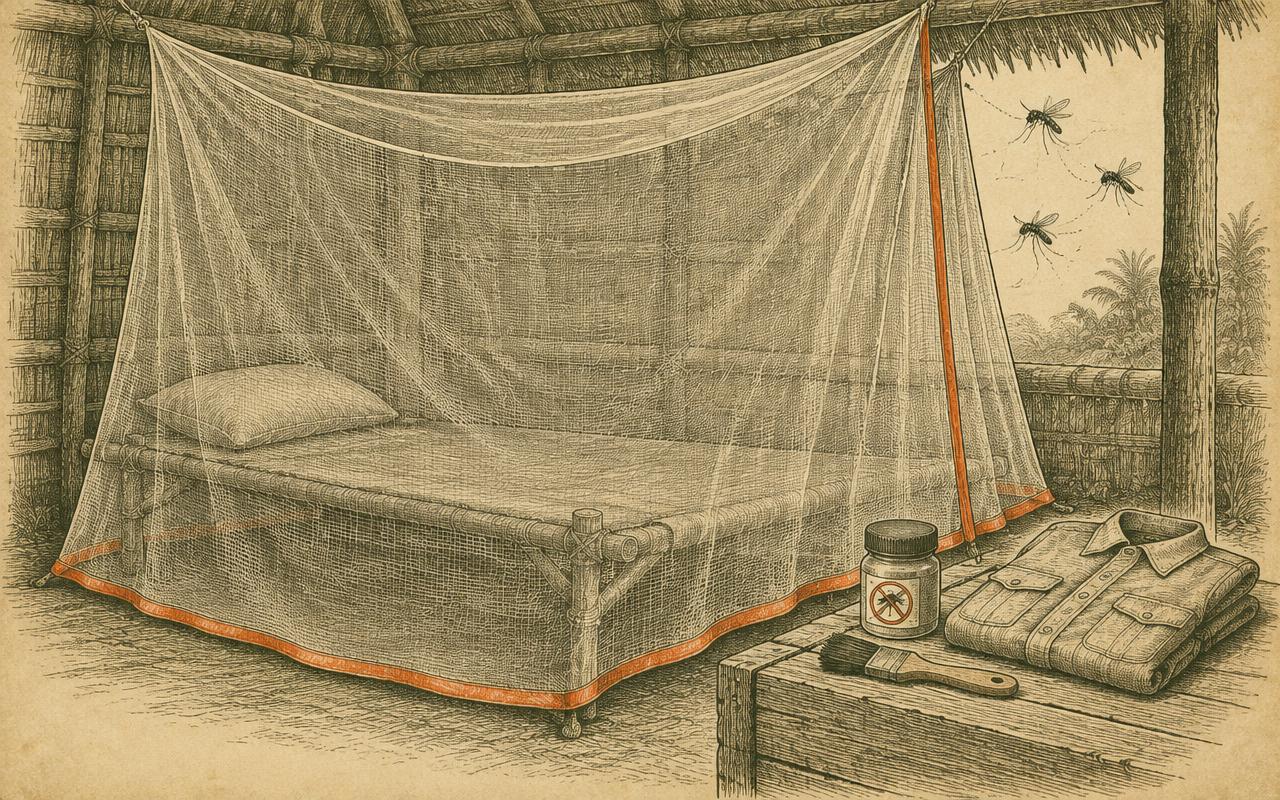
CDC's general mosquito page says do not use OLE or PMD on children under 3, and older CDC materials say do not use repellent on babies under 2 months. CDC's newer clinical reference says DEET, picaridin, IR3535 and 2-undecanone can follow the label without an age floor, and EPA sets no blanket DEET ceiling for children. The safe middle: dress infants in long sleeves and cover the carrier or crib with netting, then use a labeled product on older children.
- 06
Never improvise a repellent
Household insecticide and fabric-treatment permethrin are not skin repellents. Neither is a garden spray, a fuel, or a 'natural' concentrate with no EPA registration behind it.