Food · 30 minutes with prepared jerky · Intermediate
Make Pemmican-Inspired Meat & Fat Portions
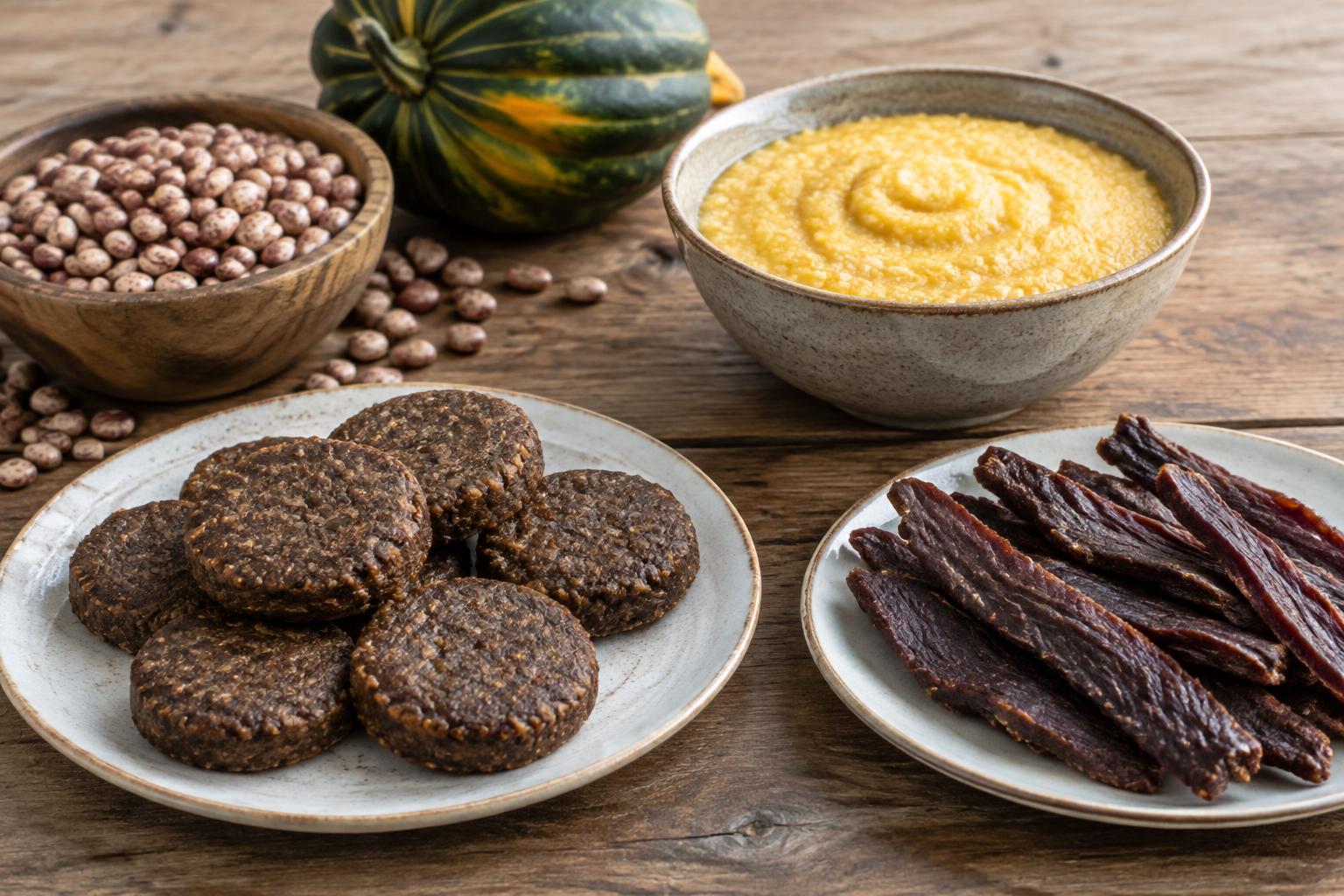
Learn the history of Métis pemmican and make a modern meat-and-tallow adaptation for refrigerated or frozen storage—not an untested years-long ration.
This is for educational purposes only. Not professional medical, electrical, or safety advice.
Warning
Homemade pemmican is NOT established as shelf-stable by these sources. A hard texture, fat coating, dried berries or vacuum seal does not prove it safe. This adaptation requires refrigeration or freezing; do not rely on it for multiday travel without cold storage.
- 01
Understand the tradition and the limit
The Gabriel Dumont Institute documents pemmican's importance in Métis buffalo harvesting and trade, and the Cree origin of its name. Traditions differ between communities. This recipe is a modern home adaptation, not a reproduction of every Indigenous method or a validated shelf-stable preservation process.
- 02
Begin with safe, ready-to-eat meat
Use commercially prepared ready-to-eat jerky, or lean beef jerky made with the tested heating-and-drying method in this library. Grind it finely using clean, dry equipment. Do not substitute raw dried meat, cold-smoked meat or meat with an unknown handling history. Follow original ingredient storage labels.
- 03
Warm the fat and mix a small batch
Use purchased food-grade rendered beef tallow rather than unverified home rendering. Warm gently in a clean pan only until it melts, following the product's directions. Stir small amounts into the ground jerky until the mixture holds together when pressed. No meat-to-fat ratio establishes safety or shelf stability. Hot fat burns: never add water to melted fat.
- 04
Portion without adding moisture
Press into small food-safe containers with clean utensils. Optional commercially dried berries add flavor; they are not preservatives. Do not add fresh fruit or water. Melting fat is not a validated pathogen-kill step for the finished mixture. Label the ingredients and preparation date.
- 05
Keep it cold, not in a warm pack
Refrigerate at 40°F (4°C) or below within 2 hours, or within 1 hour when the surroundings exceed 90°F (32°C). Use small, shallow containers for prompt cooling. Use refrigerated leftovers within 3–4 days or freeze promptly at 0°F (−18°C) or below. Without reliable refrigeration, prepare only what you can eat within those time limits; do not save leftovers at room temperature. The 3–4-day refrigerated limit here is a conservative application of USDA leftover guidance, not a tested pemmican-specific shelf life. Never transfer plain jerky's room-temperature storage allowance to this mixture. For unrefrigerated travel, use commercially labeled shelf-stable rations instead.